

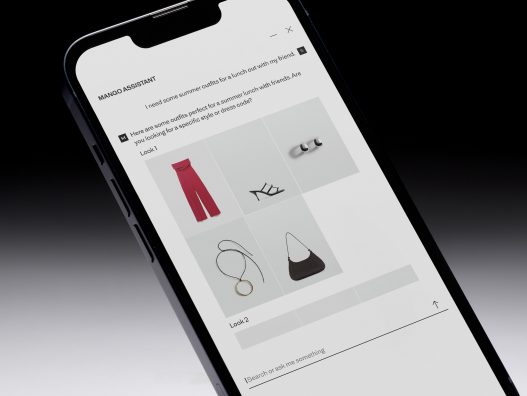
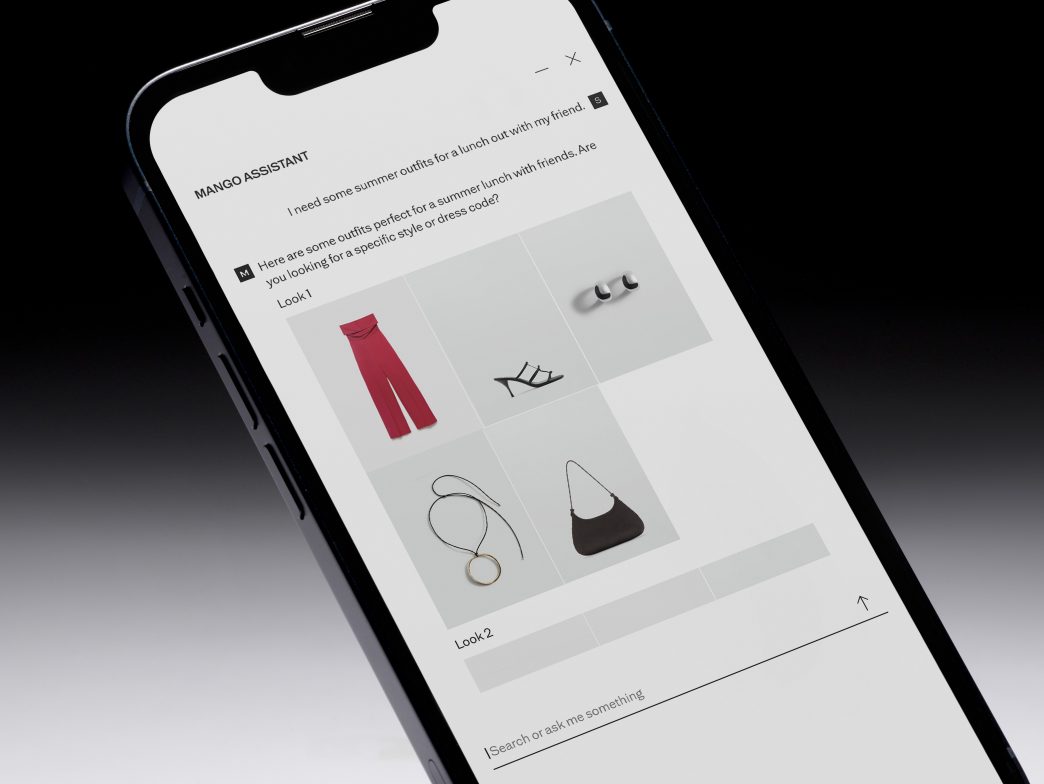
As if an outfit weren’t already a code of colours, silhouettes, and references, Mango has now introduced the algorithm as co-stylist. With the launch of „Mango Stylist“, the Spanish brand draws yet another line between human intuition and machine optimisation. Active in nine international markets and dedicated exclusively to womenswear, the tool promises personalised looks via chat, based on individual preferences, current trends, and generative AI.
Phygital Fashion: Where Online Shopping Meets Style Consultancy
The use of artificial intelligence in fashion is nothing new — but Mango takes a decisive step further. Where competitors such as Zalando or H&M base their recommendation engines mostly on past purchases or standard metrics like colour and size, Mango opts for a hybrid interface — „phygital“ in the truest sense. Customers receive suggestions not only via the website, but through conversation — as if a stylist were in direct exchange, just digital.
This new closeness feels charming at first. But how well can a chatbot interpret fashion needs that aren’t based on clicks or demographics, but on feeling, context, and social codes? Who decides whether an asymmetric skirt is a stylistic choice or a misstep? This is precisely where the dilemma of algorithmic styling reveals itself: it’s efficient, but not empathetic. It recognises patterns, but not attitude.
What Sets Mango Apart from Zalando, Farfetch & Co.
Farfetch experimented with AI-driven visual merchandising as early as 2021; Zalando has been working on machine-learning processes to give shape to a „style profile“ for years. But the vision of automating aesthetic intelligence remains a balancing act. Nowhere is the limit of machine logic more visible than in sizing: even as Mango works on the internal digitalisation of its value chain — from design to distribution — fit remains a fundamentally human experience. AI can guess, but it cannot feel where a waistband pulls or how a fabric falls.
What is „Phygital Fashion“ ?
The term phygital combines "physical" and "digital" and describes hybrid experiences that seamlessly connect the physical and digital worlds.

In fashion, this means: customers discover, purchase, or interact with fashion products simultaneously online and offline — through virtual fitting rooms, in-store QR codes, or, as with Mango Stylist, AI-assisted styling consultations in social media chats.

The goal is an immersive, cross-channel brand experience with maximum personalisation.
Mango Makes Tech a Trend
At the same time, Mango Stylist is an expression of a larger strategic shift. The brand — once positioned as a fast fashion alternative to Zara — is pursuing a new identity as a tech-savvy lifestyle brand through its 4E strategy programme. With platforms like „Inspire“ for design inspiration and „Lisa“ for internal processes, the company is becoming a digital think tank. Technology here is not staged as a tool, but as a point of view.
Tech-branding is increasingly replacing the classic fashion campaign: instead of supermodels, chatbots, platform names, and data narratives now shape brand image. The AI becomes the icon — at least for as long as it stays on-trend. On TikTok, videos are already circulating in which users debunk their AI-generated looks: too generic, too polished, too predictable. The individuality that’s promised often feels like it came from a template.
What AI-Style Fails to Capture
And this is where the sharpest criticism lies. Where is the space for subversion, for cultural diversity, for anti-aesthetics? Style is also a form of friction — not just relevance. An algorithm trained on consensus and average tends towards smoothing things out. Subcultural codes, queer perspectives, and non-conforming body types rarely find space within it. The idea of „style“ is reduced to a series of predefined parameters that homogenise not just fashion, but identity.
And yet, despite all the criticism: Mango has touched a nerve. Between chat interface and style suggestion, a zeitgeist is reflected — one that understands fashion not as an art form, but as a service. That can be convenient. Or concerning. Whether the algorithm truly knows better what looks good remains an open question. One thing, however, is certain: it will keep trying.