
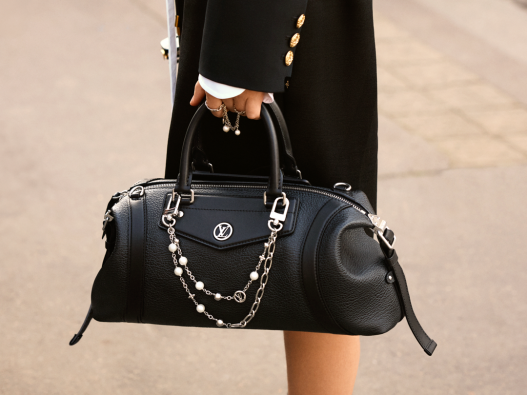
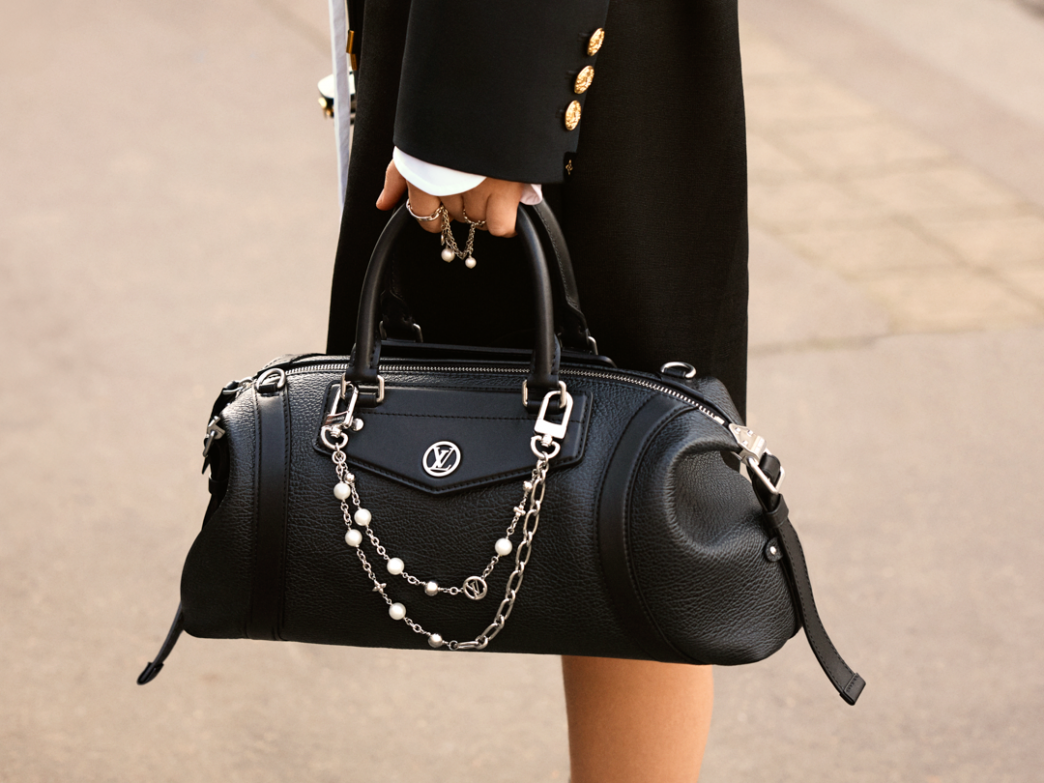
The longing for meaning is back — not in the grand gesture, but in the smallest form. Where logos once dominated, miniatures in metal, enamel, or beads now tell quiet stories of identity, belonging, and memory. Charms — those playful pendants once dismissed as lucky trinkets or tourist souvenirs — are experiencing a fashion comeback this season that reads as far more than mere nostalgia.
Charms are no longer just relics from past decades or Y2K romanticism in the Pandora mode. They have become part of a new, hyper-personal look in which fashion operates less through consumption than through codes. When bags are adorned with chains that recall ancient talisman necklaces, the conversation is not just about design — it’s about meaning. The passion for detail doesn’t contradict coolness. It is its essence.
Charms in High Fashion
Luxury fashion has not remained untouched by this micro-trend. In Louis Vuitton’s current „Flight Mode“ campaign — staged between Parisian kerbsides and hotel lobbies — British creator Madeline Argy carries a black LV Biker Bag, its pendant chains draped with pearls and silver links like a piece of fine jewellery. Here, charms are not used additively but conceptually: as a creative extension of personality, a subtle personal signature.
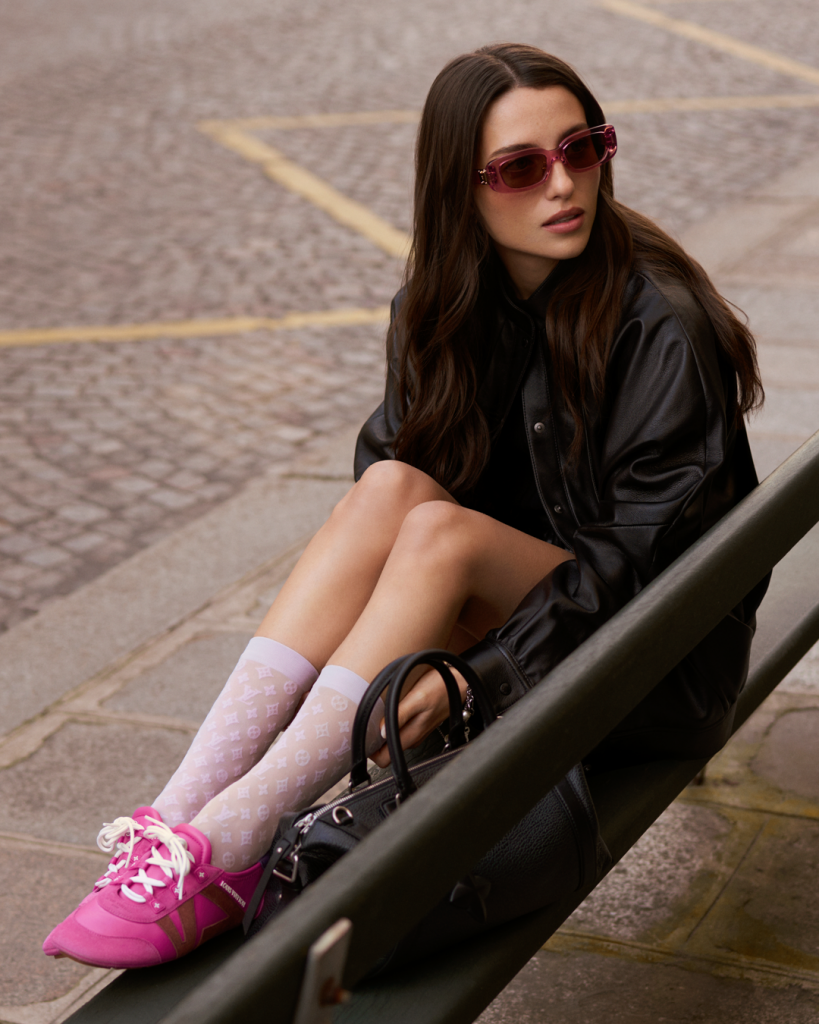
The stylistic prologue to this trend can, however, be traced back a year earlier — on the wrists and bag handles of fashion creators on Instagram and TikTok who were adorning their Hermès Birkin bags with iconic charms: the Rodeo Horse, silk carré miniatures, or tiny mascots from the house of Hermès. What sounds like a contrast — five-figure bag values alongside childlike, playful pendants — became a calculated style device: luxury with irony, heritage objects with a pop attitude. The charm trend thus became charged not only aesthetically, but culturally.
On TikTok and Instagram, a digital movement has formed around #BagCharms, with Gen Z in particular adding new layers of meaning to the trend. Between DIY kits, vintage finds, and personalised charms featuring astrological motifs, hyper-individual looks emerge that stretch from digital to material identity. Each combination is a visual diary — every bag a narrative web of pendants, symbols, and memories.
@kezia.cook I’m sorry but aren’t these the cutest charms you’ve ever seen 🥹 #bagcharms ♬ my first love was the ocean – beachbumblaine
Are Charms the New Status Symbols?
What once was communicated through prominent logos now happens through narrative detail. In the language of charms, a new kind of luxury is articulated — one charged not by price, but by meaning. Small pendants symbolise memories, political statements, hobbies, and humour.
Designers like Simone Rocha, Jonathan Anderson (Loewe), and Nigo (Kenzo) are experimenting with accessory characters and textile miniatures — between childlike playfulness and couture-level complexity. Even Miu Miu, the label of the moment, now uses charm-inspired fastenings and clip details in its bag collections, as functional as they are aesthetic.
The current charm trend stands as an exemplar of a broader movement within fashion that understands individualisation not merely as a marketing strategy, but as a sociocultural response. It speaks to a return to ritual: collecting, curating, weaving lived experience into everyday objects. Amid algorithmic homogeneity, choosing a charm becomes a statement.